
By Sarah Jenkins — Proud Pet Parent & Pet Wellness Enthusiast
On a warm, sunny day, few snacks are as refreshing as a crisp slice of juicy watermelon. As you sit back enjoying a bite, you will likely find a pair of hopeful eyes looking up at you, begging for a piece.
It’s natural to want to share your favorite treats with your furry companion, but human foods can be tricky for a dog’s digestive system. So, can dogs eat watermelon?
The short answer is yes! Watermelon is actually one of the best fruits you can share with your dog. However, before you hand over a slice, there are a few crucial rules you must follow to make sure it remains a safe and healthy treat.
Here is everything you need to know about serving watermelon to your dog safely.
The Health Benefits: Why Watermelon Is Great for Dogs
Watermelon isn’t just tasty for dogs—it’s packed with nutrients that support their overall health. When served properly, this sweet treat offers several great benefits:
- Hydration Boost: Watermelon is made of roughly 92% water. It’s an ideal snack for hot summer days to help keep your pup cool and hydrated.
- Rich in Antioxidants: It contains Lycopene and Vitamin C, which help fight cellular damage and support a healthy immune system.
- Eye and Skin Health: Loaded with Vitamin A, watermelon helps maintain good vision and healthy skin for your dog.
- Low Calorie & Fat-Free: Unlike many commercial dog treats that are packed with extra calories, watermelon is naturally low in calories and completely fat-free.
The Hidden Dangers: Rinds and Seeds
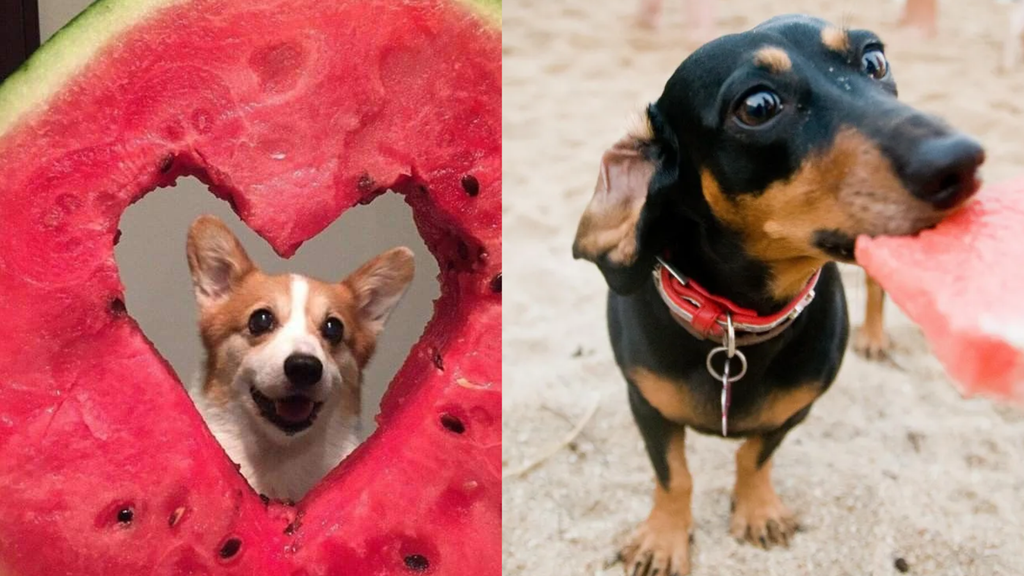
While the pink flesh of the watermelon is completely safe and nutritious, the other parts of the fruit pose real health risks for your dog.
1. The Seeds (Choking & Blockage Risk)
You should never feed your dog a slice of watermelon containing black seeds. While a couple of accidental seeds might pass through a large dog without issue, seeds can cause intestinal blockages, especially in smaller breeds. They are also difficult for dogs to digest and can lead to painful belly aches.
2. The Rind (Intestinal Danger)
The hard green outer layer (the rind) is far too tough for a dog’s stomach to break down. If your dog swallows chunks of the rind, it can lead to severe gastrointestinal upset or, worse, a dangerous physical blockage in their digestive tract that may require surgery. Always trim away all green and white parts of the rind before serving.
How Much Watermelon Can a Dog Eat?
Even healthy treats should be given in moderation. The golden rule for dog treats is the 10% Rule: treats should never make up more than 10% of your dog’s daily caloric intake.
- Small Dogs: 1 to 2 small, seedless bite-sized cubes.
- Medium Dogs: 3 to 4 bite-sized cubes.
- Large Dogs: A small handful of bite-sized pieces.
Introducing too much watermelon at once can cause a mild upset stomach or loose stools due to the high water and fiber content. Start with a tiny piece to see how your dog reacts.
3 Fun Ways to Serve Watermelon to Your Pup
Want to make watermelon snack time even more exciting? Try these easy, dog-friendly ideas:
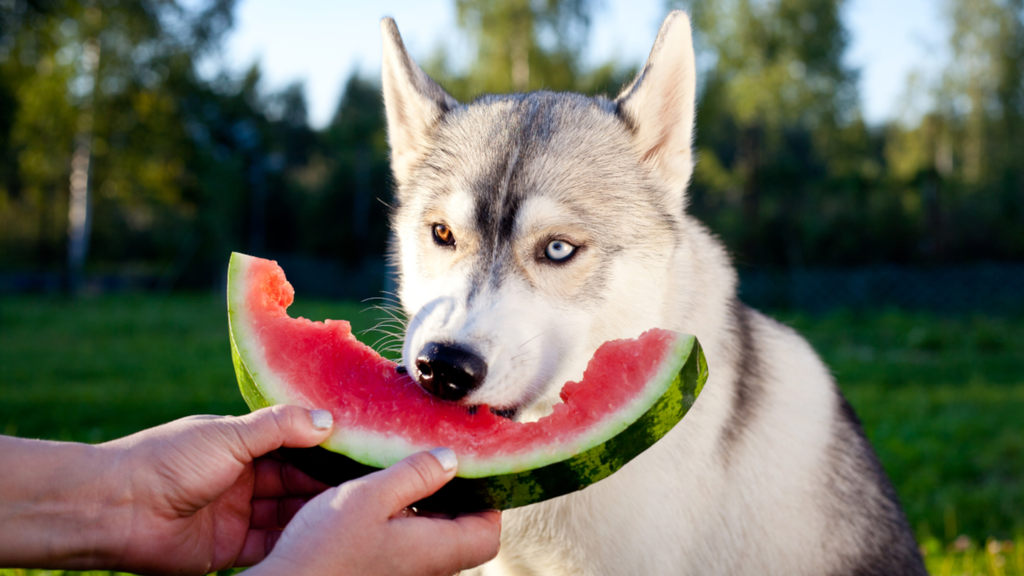
- Fresh Bite-Sized Cubes: Cut seedless watermelon flesh into small, manageable cubes that match your dog’s size.
- Frozen Watermelon Treats: Freeze seedless cubes on a tray for a refreshing, crunchy treat on hot afternoons.
- Pupsicles: Puree seedless watermelon flesh with a bit of plain, unsweetened coconut water or plain Greek yogurt, pour the mixture into silicone ice molds, and freeze overnight.
Final Thoughts
Can dogs eat watermelon? Absolutely! As long as you remove all the seeds and rind, seedless watermelon is a hydrating, nutrient-dense, and delicious snack that your dog will love.
Just keep portion sizes small, listen to your dog’s digestive feedback, and enjoy sharing a cool slice together!