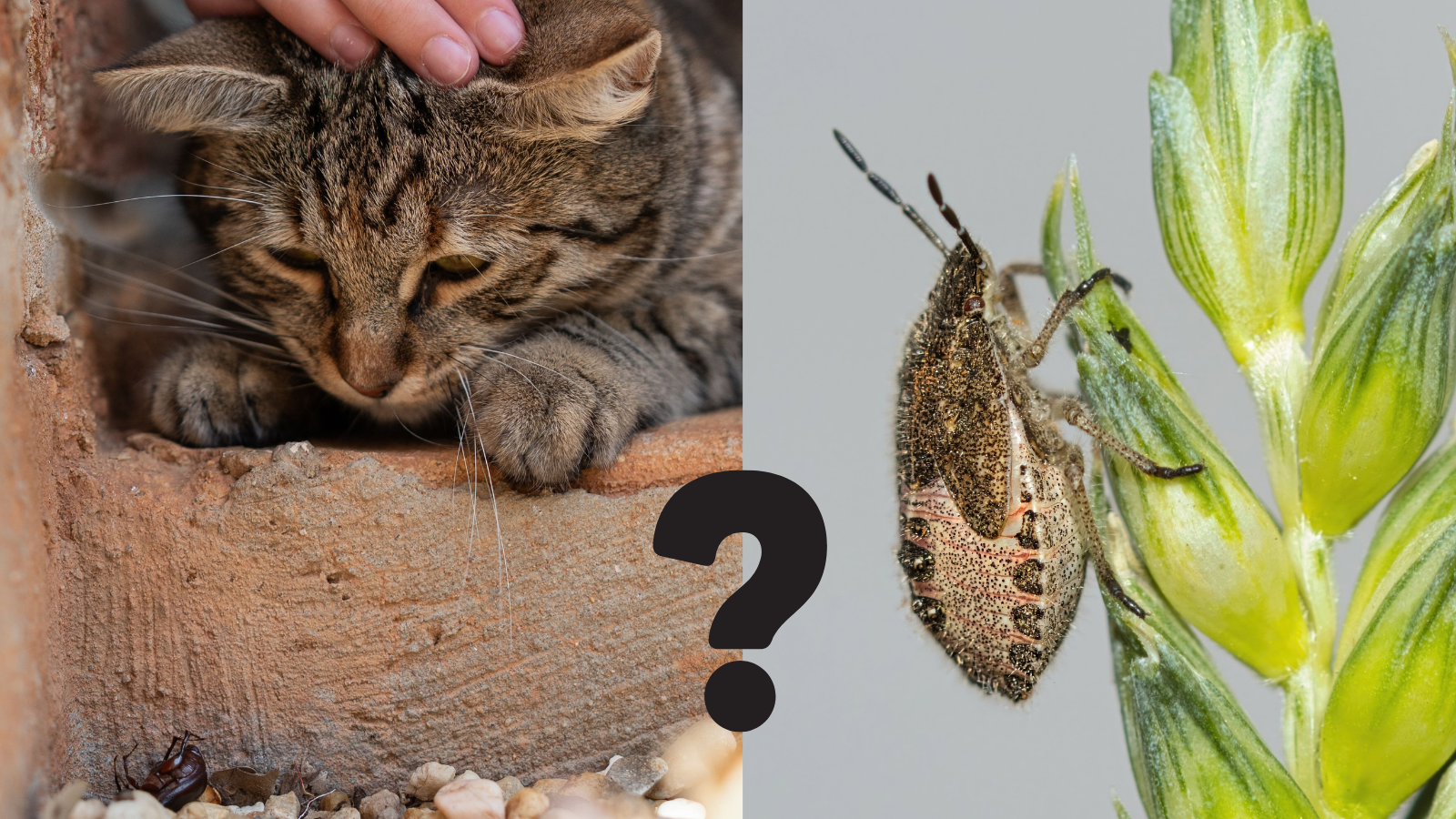
If you share your home with a curious feline, you already know that anything that crawls, buzzes, or skitters across the floor is instantly categorized as target practice. During certain times of the year, brown marmorated stink bugs often sneak indoors, making them an easy target for indoor hunters. But can cats eat stink bugs safely, or could ingesting one make your pet sick?
The quick answer is no, stink bugs are not technically poisonous or fatal to cats, but they can still cause unpleasant physical side effects. The foul-smelling defense fluid stink bugs secrete can irritate your cat’s mouth, eyes, and digestive tract.
In this guide, we break down what happens when a cat eats a stink bug, potential health risks, and what steps you should take if your cat decides to make a snack out of one.
1. Are Stink Bugs Poisonous to Cats?
The most urgent concern for pet parents is toxicity. Fortunately, stink bugs do not contain systemic toxins or venom that cause organ failure or life-threatening poisoning in felines.
- Non-Toxic Classification: Stink bugs are non-venomous and non-toxic.
- The Secretion Threat: Their primary defense mechanism is producing a harsh, pungent chemical fluid from specialized glands. This fluid is designed to repel predators through taste and odor, which is where the main trouble lies for your cat.
2. Common Symptoms After Eating a Stink Bug
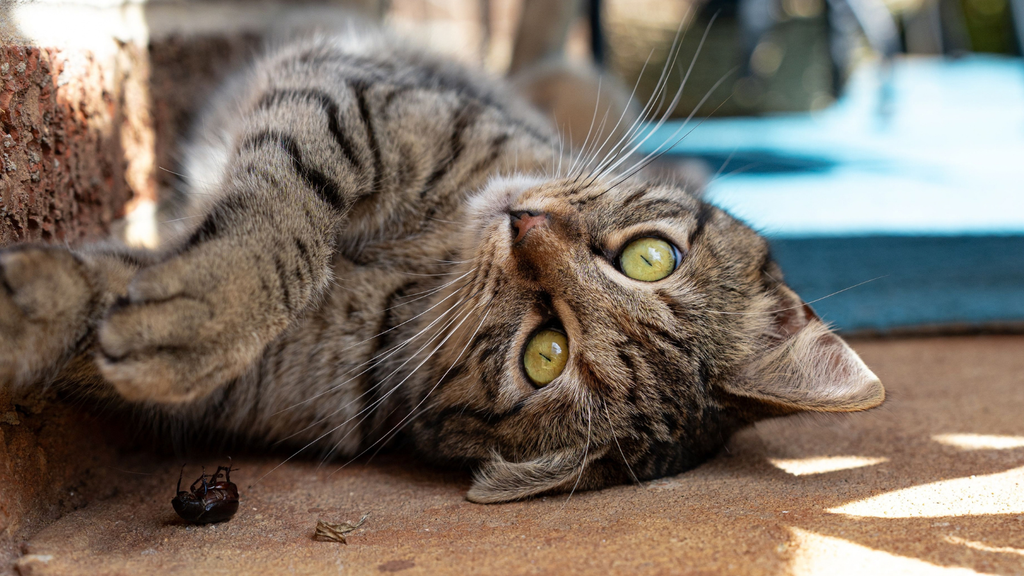
Even though stink bugs are not poisonous, their defense fluid is highly bitter and acidic. When a cat bites, chews, or swallows one, you may notice immediate localized symptoms:
- Excessive Drooling and Foaming: The bitter, unpleasant taste of the stink bug’s defense spray will trigger heavy salivation or temporary foaming at the mouth as your cat tries to flush out the bad taste.
- Vomiting and Upset Stomach: The chemical secretions can irritate the stomach lining, leading to mild vomiting or dry heaving shortly after ingestion.
- Mouth and Eye Irritation: If the bug squirted its fluid directly into your cat’s eyes or sensitive gums, it can cause redness, watering, and temporary irritation.
- Lethargy or Decreased Appetite: Some cats may feel off for a few hours due to mild gastrointestinal discomfort.
3. Can Stink Bugs Cause Intestinal Blockages?
While one or two small insects usually pass through a cat’s digestive tract without major issues, the hard outer shell (exoskeleton) of a stink bug is made of chitin, which is difficult for mammals to digest.
If a cat eats multiple stink bugs, the indigestible hard shells can clump together in the stomach or intestines. In rare cases, this can lead to a gastrointestinal blockage or form a hard mass called a bezoar, which may require veterinary attention to clear.
4. What to Do If Your Cat Eats a Stink Bug
If you catch your cat in the act of munching on a stink bug, follow these easy steps to minimize discomfort:
- Offer Fresh Water or Wet Food: Encourage your cat to drink fresh water or eat a small spoonful of wet food. This helps wash away any lingering bitter secretions from their mouth and tongue.
- Wipe Their Mouth and Paws: Use a damp, soft cloth to gently wipe your cat’s lips, mouth, and paws to remove any lingering smelly fluid they might lick off later.
- Check Their Eyes: If your cat is squinting or rubbing their eyes, check for redness. You can gently flush the area with pet-safe saline eye drops if necessary.
- Monitor for 24 Hours: Keep an eye out for persistent vomiting, inability to keep food down, or extreme lethargy.
How to Prevent Your Cat from Hunting Stink Bugs
Since cats hunt out of natural instinct, the best defense is keeping stink bugs out of your home altogether:
- Seal Entry Points: Inspect window screens, doors, and weather stripping for small gaps where stink bugs can crawl inside.
- Use Bug Zappers or Traps: Place pet-safe indoor insect traps near windows or doors where stink bugs gather.
- Safely Remove Them First: If you spot a stink bug inside, remove it with a tissue or vacuum cleaner before your cat spots the movement.
The Bottom Line
While you shouldn’t panic if your cat accidentally eats a stink bug, it is best to prevent them from making a habit of it. The foul chemicals can cause uncomfortable drooling, temporary mouth irritation, and a mild upset stomach. Always keep fresh water handy and consult your veterinarian if symptoms persist longer than 24 hours.
No responses yet